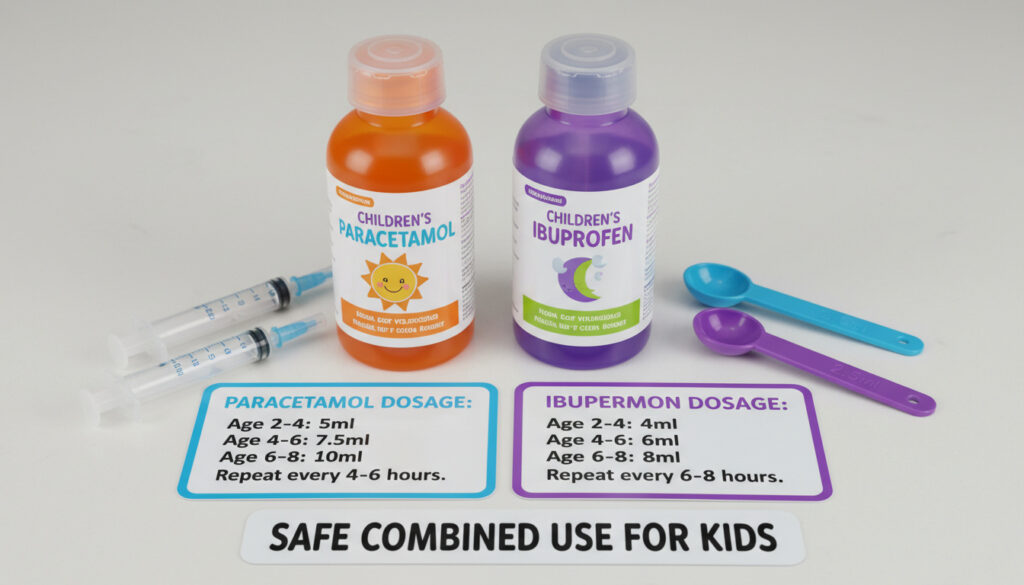
Can I Take Paracetamol and Ibuprofen Together – Safe Dosing for Children
Parents and caregivers frequently ask whether paracetamol and ibuprofen can be administered together to children experiencing moderate pain or fever. Clinical guidelines confirm that these medications do not interact harmfully and can be given simultaneously or in alternation when dosed correctly by weight and age.
The combination addresses pain through complementary mechanisms. Paracetamol (acetaminophen) acts centrally to reduce pain and fever, while ibuprofen, a non-steroidal anti-inflammatory drug, targets inflammation at the site of injury. This dual approach proves particularly effective for pediatric toothache and post-surgical discomfort.
Strict adherence to weight-based calculations and maximum daily limits prevents toxicity. Underweight children face heightened overdose risks if dosed by age rather than kilograms, making accurate measurement essential.
Can You Take Paracetamol and Ibuprofen Together?
Safe for one or two daily administrations under medical guidance
Paracetamol 4g, Ibuprofen 1.2g for adults; weight-based limits for children
Every 4-6 hours for paracetamol, 6-8 hours for ibuprofen
Required beyond 48 hours or for children under minimum age/weight
- No pharmacological interaction exists between the two drugs
- Fixed-dose combinations (3.3:1 ratio) optimize pediatric dosing accuracy
- Ibuprofen requires administration with food or milk to prevent gastric irritation
- Underweight children receiving age-based dosing may ingest 133% of recommended amounts
- Both medications provide first-line relief for pediatric dental pain
| Aspect | Paracetamol | Ibuprofen | Combined Use |
|---|---|---|---|
| Primary Action | Central pain/fever reduction | Peripheral anti-inflammatory | Dual pathway pain control |
| Minimum Age | 1 month (>4 kg) | 3 months (>6 kg) | Respective minimums apply |
| Single Dose Max | 1 g (adults) | 400 mg (adults) | Respective single limits |
| Daily Frequency | Every 4-6 hours | Every 6-8 hours | Alternating per schedule |
| 24-Hour Maximum | 4 g | 1.2 g | Do not exceed individual limits |
| Onset of Relief | 30-60 minutes | 15 minutes | 15 minutes when ibuprofen included |
What Is the Recommended Dosage When Taking Them Together?
Adult Maximum Limits
For adults, paracetamol should not exceed 1 gram per single dose, with a strict ceiling of 4 grams within any 24-hour period. Doses require spacing every 4 to 6 hours, limiting intake to four administrations daily.
Ibuprofen dosing ranges between 5 and 10 milligrams per kilogram per dose, capped at 400 milligrams per administration and 1,200 milligrams total per day. The medication requires 6 to 8 hours between doses, restricting use to three times daily.
Pediatric Weight-Based Calculations
Children require precise milligram-per-kilogram calculations. Paracetamol administers at 15 mg/kg per dose, while ibuprofen uses 5–10 mg/kg. MedlinePlus provides specific volume measurements based on concentration formulations.
Liquid formulations vary significantly. Infant drops typically contain 50 mg per 1.25 mL, while children’s liquid offers 100 mg per 5 mL. Caregivers must verify concentration and utilize oral syringes rather than household spoons to ensure accuracy.
Maintain a written log or digital timer recording each administration. Simultaneous dosing should occur no more than once or twice daily to prevent accumulation errors.
What Are the Risks and When to Avoid Taking Them Together?
Hepatotoxicity and Gastrointestinal Concerns
Paracetamol overdose triggers hepatotoxicity at levels as low as 125–150 mg/kg, potentially causing irreversible liver damage. Early signs include nausea and abdominal pain. Research indicates that underweight children face disproportionate risks when age-based dosing replaces weight-based calculations.
Ibuprofen exceeds safe thresholds at doses above 10 mg/kg, risking gastrointestinal bleeding, renal impairment, and asthma exacerbation. These risks compound in dehydrated patients or those with existing renal conditions.
Conditions Requiring Medical Supervision
Pre-existing dehydration, asthma, or hepatic and renal dysfunction necessitate physician consultation before administration. NHS guidelines recommend administering medications individually rather than simultaneously unless specifically directed otherwise.
Seek immediate emergency care if a child exhibits persistent vomiting, lethargy, or right upper quadrant abdominal pain following medication. These symptoms suggest hepatic injury requiring urgent intervention.
Special Cases: Children, Toothache, and Overdose Risks
Age and Weight Restrictions
Paracetamol safety begins at one month of age and four kilograms body weight. Ibuprofen requires a minimum of three months and six kilograms, though some US guidelines extend this to six months unless specifically advised by a physician. FDA approval does not extend to infants under six months without medical supervision.
Multi-ingredient products present particular hazards for children under six years, as accidental duplication of acetaminophen across cold medications creates hidden overdose risks.
Dental Pain Protocols
For pediatric toothache, the combination serves as first-line therapy, providing superior relief to either drug alone. NPS MedicineWise recommends limiting this approach to two days without dental or medical review to identify underlying pathology requiring definitive treatment. For more information on how long pneumonia is contagious, you can read more here: Lunginflammation smittar hur länge
Recognizing Toxicity Progression
Toxicity manifests differently by drug. Paracetamol hepatotoxicity presents with delayed onset, sometimes 24 hours post-ingestion, while ibuprofen causes immediate gastric distress. Clinical studies emphasize that children below median weight for their age group receive substantially higher relative doses when age-based protocols substitute for weight-based calculations.
Pharmaceutical preparations combining paracetamol and ibuprofen in a 3.3:1 ratio optimize pediatric adherence and reduce dosing errors for moderate pain (FLACC scores 4–6).
How Should You Time Doses When Alternating?
- Hour 0: Administer paracetamol (15 mg/kg or 500-1000 mg)
- Hour 3: Administer ibuprofen (5-10 mg/kg or 200-400 mg) with food
- Hour 4-6: Second paracetamol dose when 4-6 hour window elapses
- Hour 9: Second ibuprofen dose maintaining 6-8 hour spacing
- Hour 12: Third paracetamol dose if needed (maximum 4 per 24 hours)
- Hour 48: Medical consultation required if pain persists
Sidra Medicine protocols confirm that alternating every 3 hours maintains therapeutic plasma levels while preventing peak concentration overlap.
What Do Health Authorities Confirm vs. Recommend Checking?
| Established Evidence | Requires Professional Consultation |
|---|---|
| No harmful direct interaction between drugs | Appropriate for specific patient under 6 months |
| Weight-based dosing essential for safety | Use beyond 48 hours for dental pain |
| Simultaneous administration safe 1-2 times daily | Patients with hepatic or renal impairment |
| Fixed-dose combinations effective for moderate pain | Children with asthma or dehydration |
| Paracetamol: 4g/24h max; Ibuprofen: 1.2g/24h max | Dosing during pregnancy or breastfeeding |
How Do These Medications Work Differently?
Paracetamol produces analgesia through central nervous system inhibition of prostaglandin synthesis and interaction with serotonergic pathways. Unlike NSAIDs, it lacks peripheral anti-inflammatory activity, making it less effective for conditions involving significant tissue inflammation.
Ibuprofen inhibits cyclooxygenase enzymes (COX-1 and COX-2) peripherally, reducing prostaglandin production at injury sites. This mechanism addresses both pain and inflammation but increases gastrointestinal and renal risks absent with paracetamol.
The complementary mechanisms explain enhanced efficacy for moderate to severe pain when combined, though current evidence supports combination use primarily for moderate pain (FLACC 4-6) rather than mild discomfort.
What Guidance Do Major Health Organizations Provide?
“Both paracetamol and ibuprofen are safe and effective pain relievers for children when used correctly. They work in different ways to relieve pain.”
— Royal Children’s Hospital Melbourne
“If you give your child both medicines, make sure you write down which medicine you have given and when you gave it. This will help make sure you do not accidentally give your child too much.”
— NPS MedicineWise
Night Doctor services emphasize that while simultaneous dosing provides rapid relief within 15 minutes, alternating schedules maintain more consistent pain control over 24-hour periods.
What Should You Do Next?
Consult a pediatrician or pharmacist to verify weight-based calculations for your child before initiating combination therapy. For detailed administration guidelines, refer to Treating my child’s pain or fever: paracetamol or ibuprofen and Pain relief for children – Paracetamol and Ibuprofen. Discontinue use and seek medical evaluation if pain persists beyond 48 hours or if any signs of adverse reaction develop.
Can paracetamol and ibuprofen be given simultaneously?
Yes, administering both at the same time is safe for up to one or two doses daily, providing relief within 15 minutes. However, strict tracking prevents accidental overdose.
Should ibuprofen be administered with food?
Always give ibuprofen with food or milk to minimize gastric irritation and reduce risks of gastrointestinal bleeding.
How accurate must weight measurements be for dosing?
Precision matters significantly. Underweight children receiving age-based rather than weight-based doses may ingest 133% of recommended amounts, risking toxicity.
Are fixed-dose combination products available?
Yes, formulations combining paracetamol and ibuprofen in a 3.3:1 ratio exist specifically for pediatric use, reducing dosing errors for moderate pain.
What indicates a potential overdose?
Watch for nausea, abdominal pain, vomiting, or unusual lethargy. Paracetamol toxicity may present with delayed symptoms up to 24 hours post-ingestion.
Can these medications treat teething pain?
The combination effectively manages pediatric toothache and dental pain, though limited to 48 hours without dental evaluation to address underlying causes.
Are there children who should not receive ibuprofen?
Avoid ibuprofen in dehydrated children, those with asthma, renal impairment, or under three months of age unless specifically directed by a physician.
More related posts